


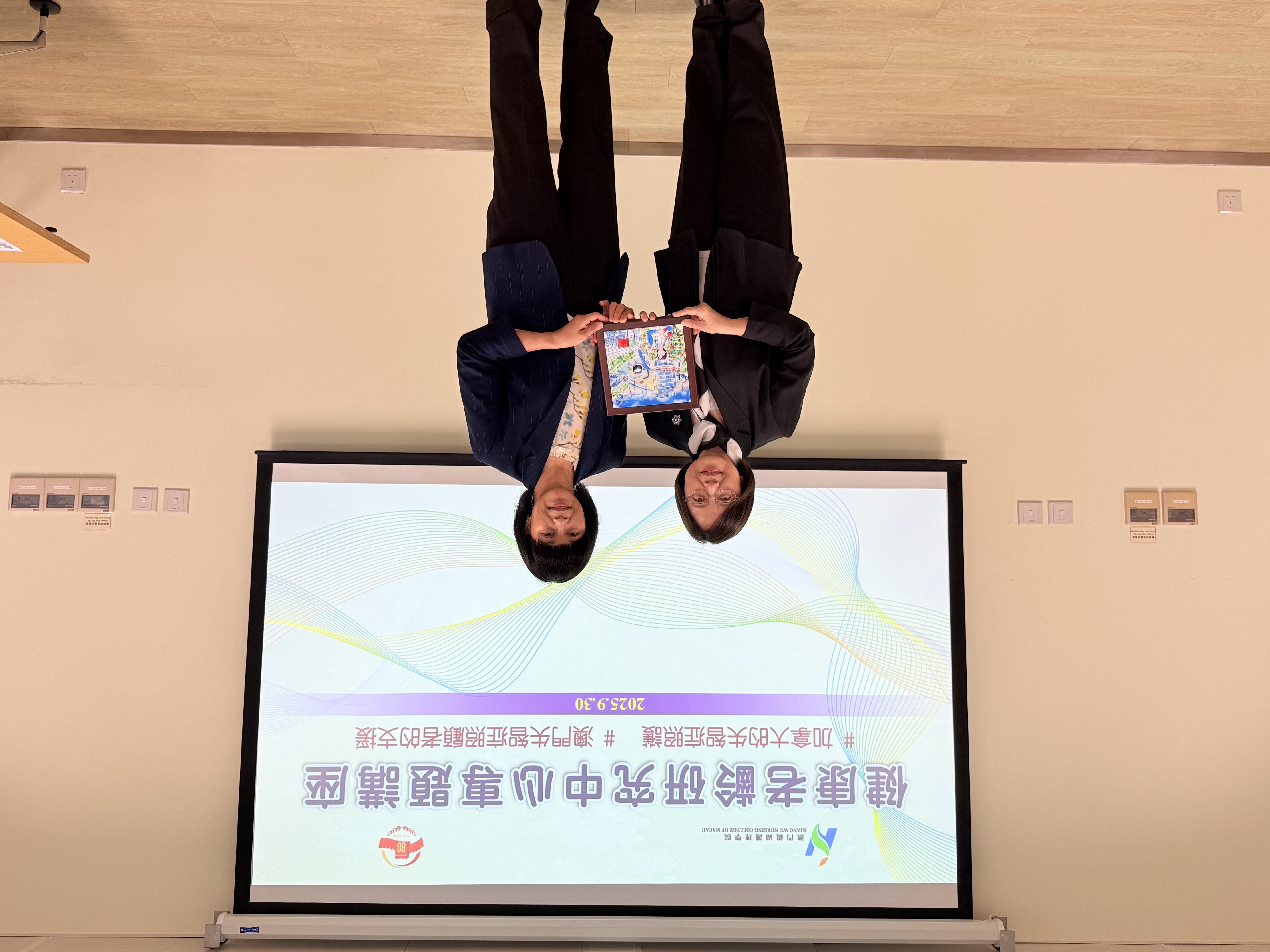
▲President Van Iat Kio presents a commemorative gift to Director Li Weiyan
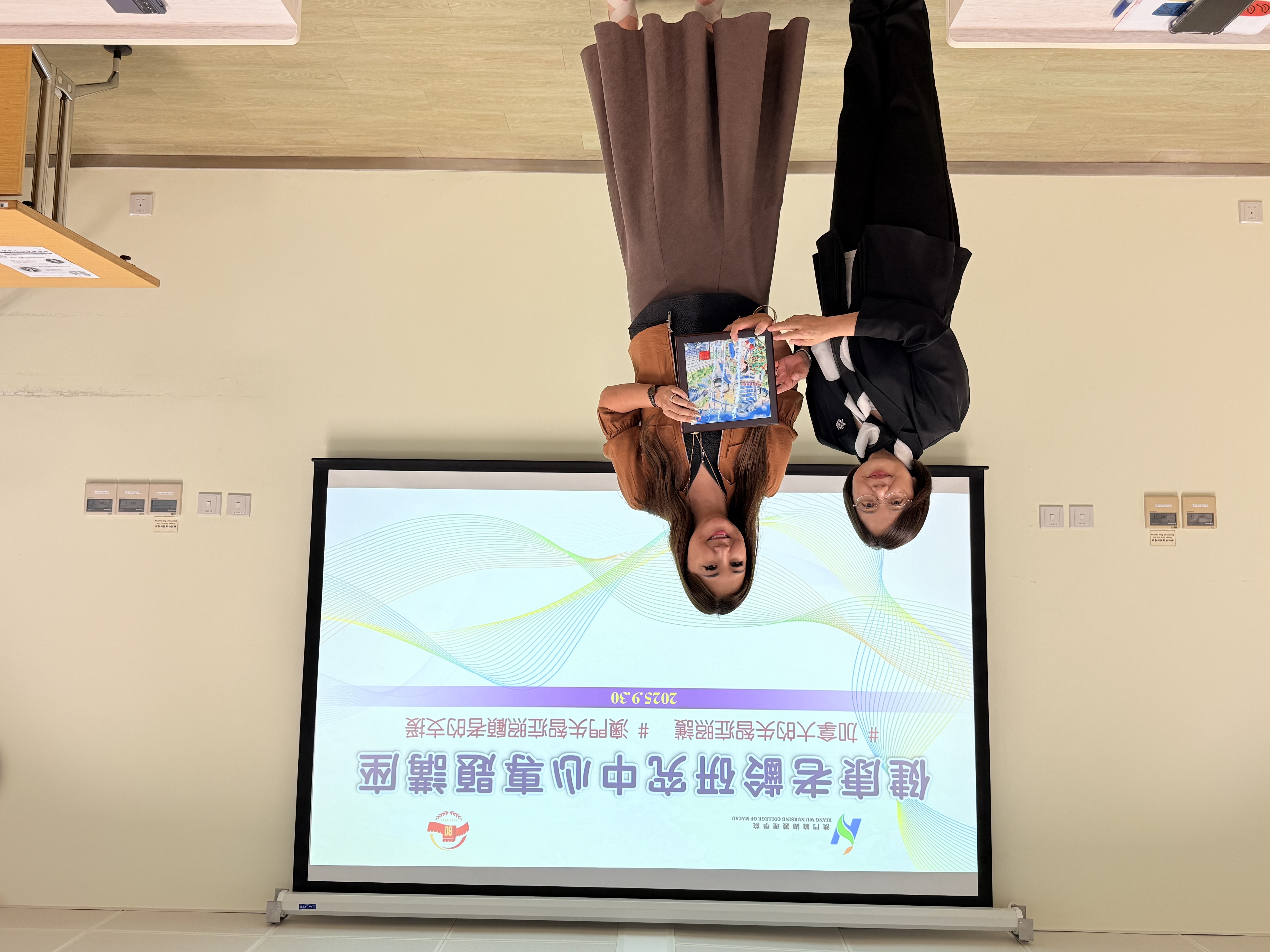
▲President Van Iat Kio presents a commemorative gift to Associate Professor Winnie Sun
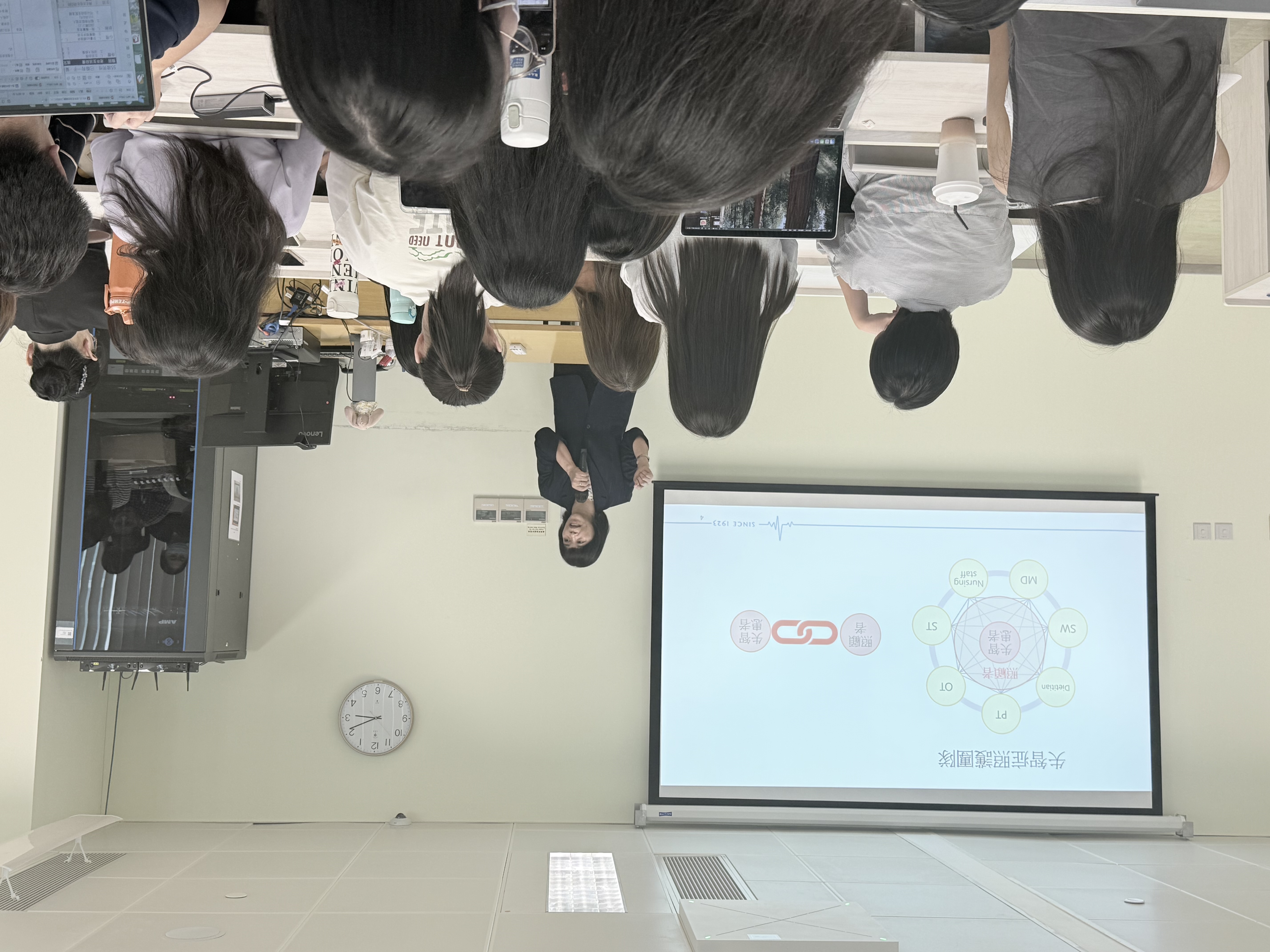
▲Executive Officer Lei Wai In introduces the Dementia Carers Online Learning Platform (iSupport)
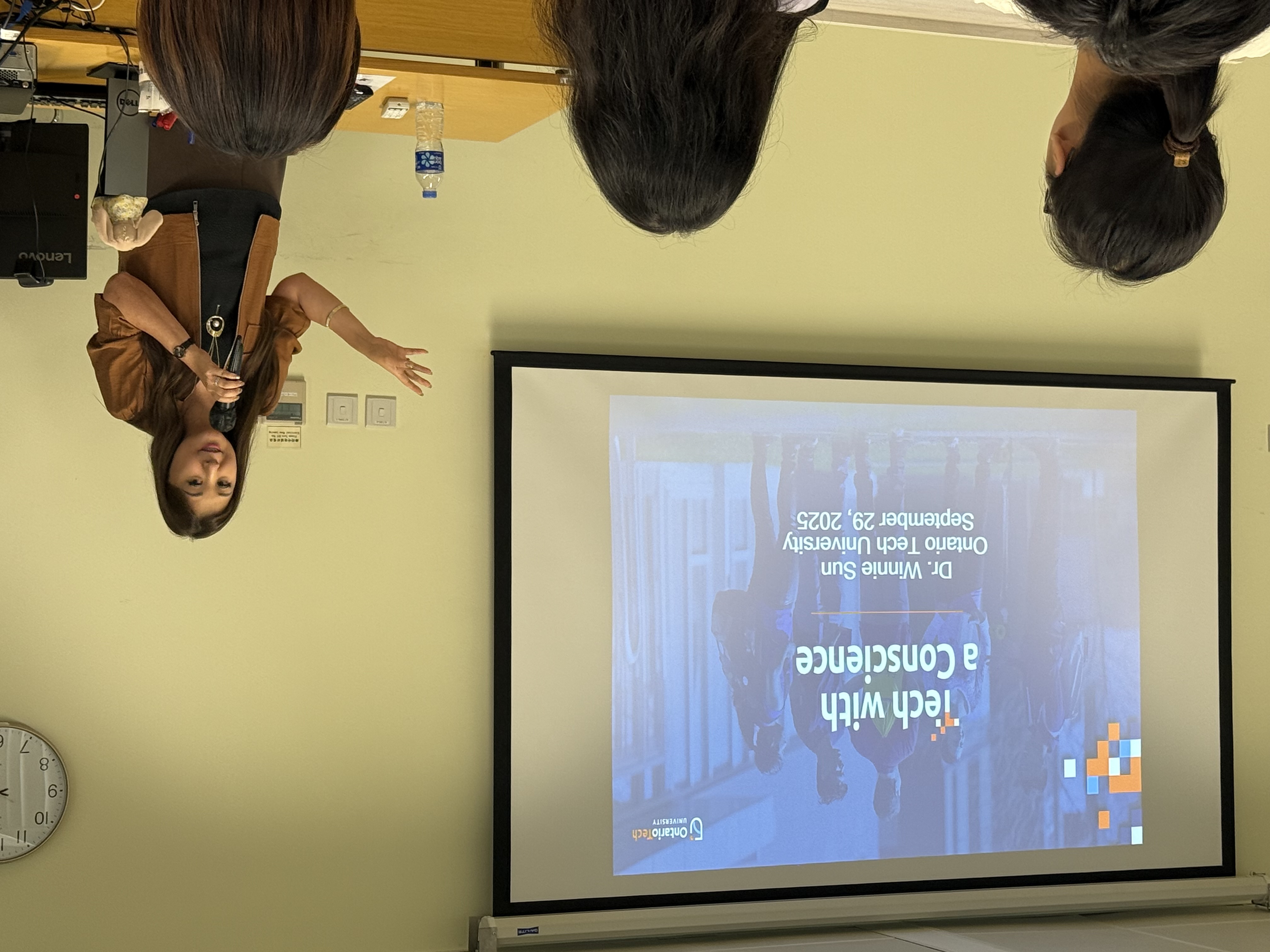
▲Associate Professor Sun demonstrates how technology enhances the health and wellbeing of individuals with dementia


Kiang Wu Nursing College of Macau (KWNC) successfully convened a specialisedsymposium on dementia care -- titled as "Healthy Ageing and Research Centre Seminar - Dementia Care", drawing enthusiastic participation from numerous staff and students. The event featured distinguished speakers including Associate Professor Winnie Sun from the Faculty of Health Sciences at Ontario Tech University, Canada, alongside KWNC Nursing and Health Study Centre Executive Officer and Macau Alzheimer's Disease Association (MADA) President, Assistant Professor Lei Wai In. Through a combination of international perspectives and local insights, the seminar delved into cutting-edge trends and practical strategies in dementia care, aiming to enhance professional expertise and drive innovative development of dementia care services within the Greater Bay Area.
During the lecture, Associate Professor Winnie Sun delivered a presentation titled ‘Technology-Enabled Dementia Care Innovations,’ providing an in-depth analysis of the latest developments and trends in dementia care within Canada. She highlighted that Ontario's 2024 enactment of the Ontario Dementia Care Improvement Act (Bill 121) presents transformative opportunities for national dementia care services. Comprehensive improvements in care quality urgently require systematic planning, diversified services, and interdisciplinary research.
Associate Prof. Sun introduced her research team's integrated dementia care model—the AVOID Frailty Model. This innovative approach employs five comprehensive interventions: Activity Engagement, Vaccination, Optimised Medication Management, VR Memory Therapy and Robot Dog Interaction, alongside Diet and Nutrition Guidance. Together, these measures holistically enhance the health and wellbeing of individuals with dementia. Furthermore, Associate Professor Sun demonstrated several innovative solutions leveraging technology to enhance social connections for individuals with dementia, increase caregiver engagement, and improve home and living environments.
Lei then delivered a presentation titled ‘Support for Dementia Caregivers in Macao,’ delving into the practical challenges faced by local caregivers and corresponding support strategies. She noted that within the Chinese cultural context, dementia carers are predominantly family members, spouses, and female relatives, who must endure prolonged exposure to patients' behavioural and emotional challenges alongside demanding care responsibilities. Carers frequently bear significant physical and psychological burdens, severely impacting their personal quality of life and wellbeing. Consequently, establishing a robust carer support system has become a critical societal priority.
To address this challenge, Lei detailed the World Health Organisation's (WHO) ‘Online Learning Platform for Dementia Carers’ (iSupport). This platform encompasses five core learning modules: Introduction to Dementia, Becoming a Carer, Caring for Yourself, Providing Daily Care, and Managing BehaviouralChanges. Through rich interactive learning content, it effectively helps carers enhance their professional skills and psychological resilience.
The research team actively participated in international collaborative studies across Macao and Greater China (funded by the Macao-China Foundation), successfully validating the platform's significant supportive impact on carers. With substantial backing from the Dr Stanley Ho Medical Development Fund, the team successfully rolled out the platform to multiple healthcare and elderly service organisations in Macao, Zhuhai, Guangzhou, and several older adult service institutions have integrated it into their daily operational workflows, enabling more carers to benefit, effectively alleviating care burdens and enhancing overall service quality.
Healthcare service providers or carers interested in the iSupport platform are welcome to contact Director Lei Wai In via email: [email protected].
ofessional expertise and drive innovative development of dementia care services within the Greater Bay Area.
During the lecture, Associate Professor Winnie Sun delivered a presentation titled ‘Technology-Enabled Dementia Care Innovations,’ providing an in-depth analysis of the latest developments and trends in dementia care within Canada. She highlighted that Ontario's 2024 enactment of the Ontario Dementia Care Improvement Act (Bill 121) presents transformative opportunities for national dementia care services. Comprehensive improvements in care quality urgently require systematic planning, diversified services, and interdisciplinary research.
Associate Prof. Sun introduced her research team's integrated dementia care model—the AVOID Frailty Model. This innovative approach employs five comprehensive interventions: Activity Engagement, Vaccination, Optimised Medication Management, VR Memory Therapy and Robot Dog Interaction, alongside Diet and Nutrition Guidance. Together, these measures holistically enhance the health and wellbeing of individuals with dementia. Furthermore, Associate Professor Sun demonstrated several innovative solutions leveraging technology to enhance social connections for individuals with dementia, increase caregiver engagement, and improve home and living environments.
Lei then delivered a presentation titled ‘Support for Dementia Caregivers in Macao,’ delving into the practical challenges faced by local caregivers and corresponding support strategies. She noted that within the Chinese cultural context, dementia carers are predominantly family members, spouses, and female relatives, who must endure prolonged exposure to patients' behavioural and emotional challenges alongside demanding care responsibilities. Carers frequently bear significant physical and psychological burdens, severely impacting their personal quality of life and wellbeing. Consequently, establishing a robust carer support system has become a critical societal priority.
To address this challenge, Lei detailed the World Health Organisation's (WHO) ‘Online Learning Platform for Dementia Carers’ (iSupport). This platform encompasses five core learning modules: Introduction to Dementia, Becoming a Carer, Caring for Yourself, Providing Daily Care, and Managing BehaviouralChanges. Through rich interactive learning content, it effectively helps carers enhance their professional skills and psychological resilience.
The research team actively participated in international collaborative studies across Macao and Greater China (funded by the Macao-China Foundation), successfully validating the platform's significant supportive impact on carers. With substantial backing from the Dr Stanley Ho Medical Development Fund, the team successfully rolled out the platform to multiple healthcare and elderly service organisations in Macao, Zhuhai, Guangzhou, and several older adult service institutions have integrated it into their daily operational workflows, enabling more carers to benefit, effectively alleviating care burdens and enhancing overall service quality.
Healthcare service providers or carers interested in the iSupport platform are welcome to contact Director Lei Wai In via email: [email protected].

Strive for Competence and Integrity
Serve with Professionality and Care


Complexo de Cuidados de Saúde das Ilhas
Edifício do Instituto de Enfermagem Kiang Wu de Macau, Avenida do Hospital das Ilhas no.447, Coloane, RAEM
Permanent Campus
Est. Repouso No. 35, R/C, Macau


官網instagram


掃描二維碼關注官方微信
Institutional Accreditation (IA) &Nursing Education Accreditation
 |
 |
 |
| The Quality Assurance Agency for Higher Education (QAA): Institutional Accreditation |
The Motherland's Education Quality Evaluation Agency of the Ministry of Education:
Nursing Education Accreditation |
Course provider of Alzheimer's Disease International (ADI) |
